The museum was typical propaganda. But like most propaganda, half were lies but half was true. The 2006 War was an embarassment for Israel, a long time regional power, in which its modern, Western military was stalled by Hezbollah's guerilla fighters. Israel had two objectives in the war: 1. to reclaim its two captured soldiers taken by Hezbollah in a cross-border raid and 2. to destroy (or at least inflict massive damage to) Hezbollah. It failed both, and ironically Hezbollah is actually stronger than it was before the 2006 War started. Hezbollah is actually even more powerful than the Lebanese Army. Israel is getting its two soldiers back tomorrow (July 16), dead or alive no one knows, but at the cost of captured Lebanese and Hezbollah fighters. In the end, Hezbollah got everything it wanted. In May, Hezbollah overran streets and neighborhoods in West Beirut (where my apartment and university is located) and completely routed the pro-government forces. Over 80 people were killed across the country, which would have descended into another civil war if it hadn't been for the Qataris and the Doha Agreement, which turned out to be another Hezbollah victory since it gave them more power in the government, especially the power to veto any new legislation. So it looks like Hezbollah won't be disarming anytime soon.
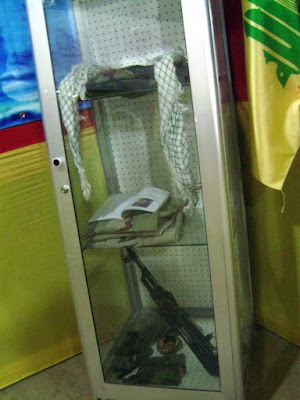
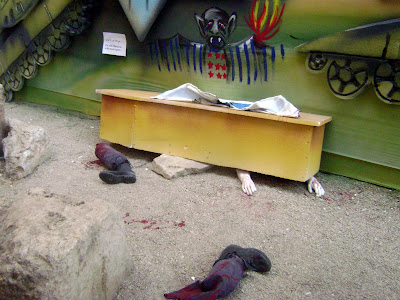
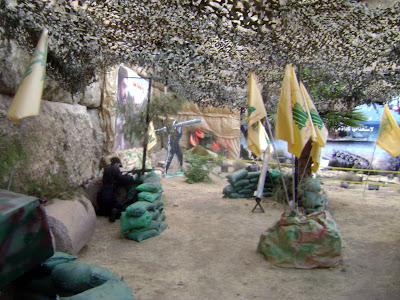
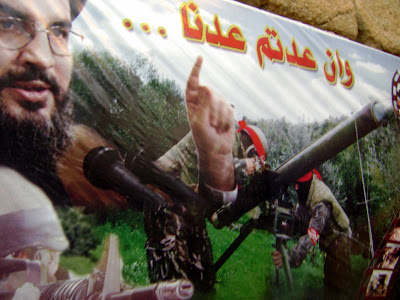
The museum, or "terrorist propaganda center", had mostly pictures of destroyed Israeli equipment and dead soldiers. Some of the captured Israeli equipment was on display (rifles, iPods, helmets, etc.) In the back was a hall filled with portraits of Hezbollah martyrs, fighters who died in the war against Israel. There was this young kid, probably 8 years old, who worked in the museum and explained the exhibits. He talked a lot but what struck me is that he actually didn't know anything. He'd been brainwashed into Hezbollah's thinking and when I tried to actually have somewhat of an intellectual discussion with him about Hezbollah, he couldn't say anything more than what he had already been taught. As I was leaving, it was hard getting through my mind that I had just been in a "terrorist" area. Then again, one man's terrorist is another man's freedom fighter. An American militiaman was a freedom fighter to his fellow colonists but a terrorist to the British Empire. Hezbollah isn't Al-Qaeda. Hezbollah is actually at war with Al-Qaeda for the same reasons that the US is: Al-Qaeda is un-Islamic and a dangerous threat to peace. Of course I don't support Hezbollah, but I just can't agree with why the US and so many Americans blindly support Israel and its regional policies, which in turn harm the US's own policy in the Middle East.
I can understand Hezbollah's resistance to Israel (which still occupies Lebanese and Syrian land...and not to mention, Palestinian land) but some people would raise the issue of Israeli civilian casualties. Though Hezbollah, to justify its legitimacy, has a strict targeting policy that forbids attacking innocent civilians (Hezbollah condemns Al-Qaeda's attacks on innocent civilians, especially 9/11), they consider Israeli civilians to be a separate issue. Nasrallah, Hezbollah's leader, stated that "in occupied Palestine, there is no difference between a soldier and a civilian, for they are all invaders, occupiers and usurpers of the land." Then again, Israel also violated the UN Resolution (which prohibited bombing in heavily populated civilian areas aka South Beirut). It's amazing how much news is filtered from the Middle East to the West and how Israeli violations against innocent civilians goes largely unreported. In my opinion, war is war. Civiians on both sides unfortunately get caught in the crossfire. If Israel wants to deserve US support, it should earn it and act appropriately. And if the US is to give support, it should only be with good intentions and not blindly.
What people should be upset about is how much reporting is altered to fit a news agency's agenda. It's a real shame considering Hezbollah's highly regarded and well-respected social services that it provides to the Lebanese people and Palestinian refugees in Lebanon (shelter, food, employment, schools, hospitals, mosques, social welfare, etc.). A US author once commented that Hezbollah's relief efforts to South Lebanon and South Beirut in the aftermath of the 2006 War was more organized and efficient than the US government's response to Hurricane Katrina. But no one in the West sees this side of Hezbollah and automatically assume they're just the Shi'a version of Al-Qaeda.
I could go on and on about Hezbollah but I'll just bring that up in more posts later on. Supposedly there's another Hezbollah museum in South Beirut, another area controlled by Hezbollah, so we'll try to see that one too. Anyway, the prisoner exchange between Israel and Lebanon/Hezbollah is tomorrow morning at 9am, and my university canceled classes for the day.
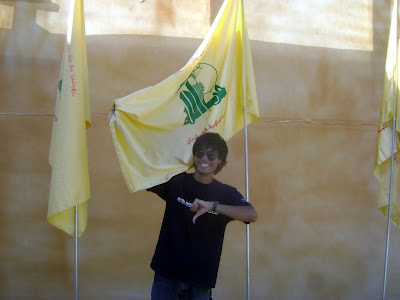
with the Hezbollah flag, i gave the thumbs down while the guards weren't looking so this wouldn't be incriminating
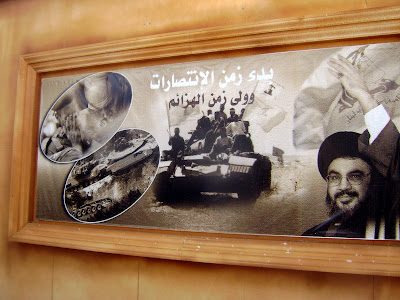
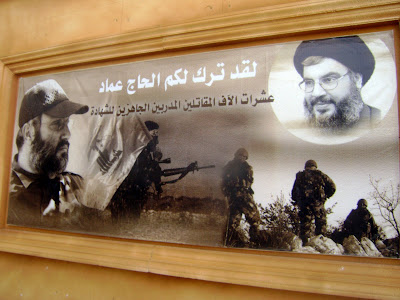
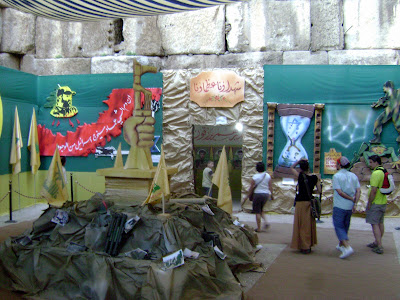

captured Israeli equipment and photos of destroyed Israeli vehicles
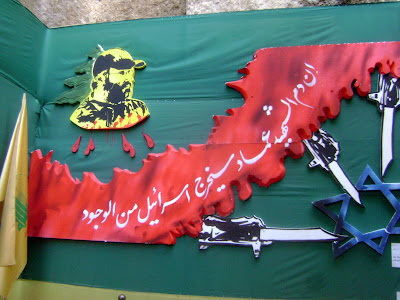
Imad
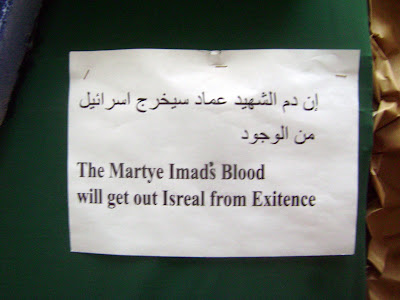


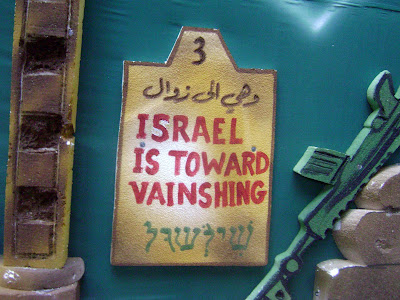

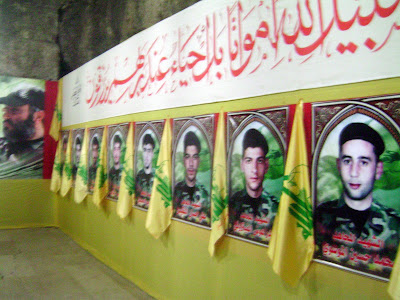
Martyrs Hall.. Hezbollah fighters killed in the war against Israel

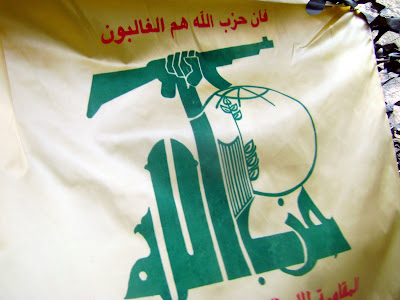
the top says "Then surely the party of God are they that shall be triumphant" (Quran 5:56) and the bottom (cut off) says "The Islamic Resistance in Lebanon"
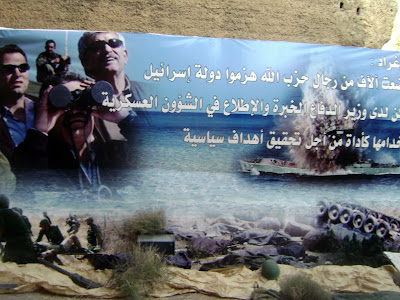
Israeli warship that was hit by a Hezbollah missile off the coast of Beirut

the Israeli Black Hawk that was shot down by Hezbollah... its wreckage is on display at the Hezbollah museum in South Beirut
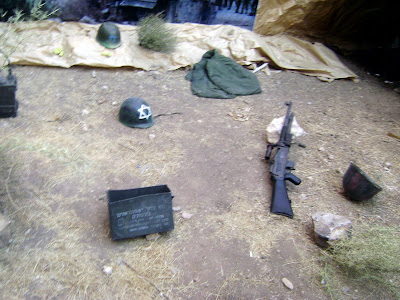
captured Israeli equipment
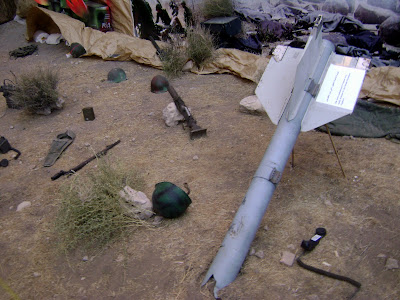

illustrating Hezbollah's tactic of firing massive amounts of missiles into Israel
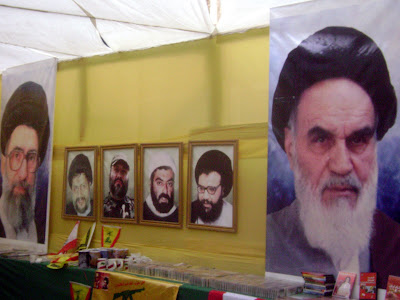
at the museum gift shop: light-up keychains and coffee mugs with the portraits of Iranian Ayatollahs/Hezbollah leaders on them...only $2...yes, they accept US currency.
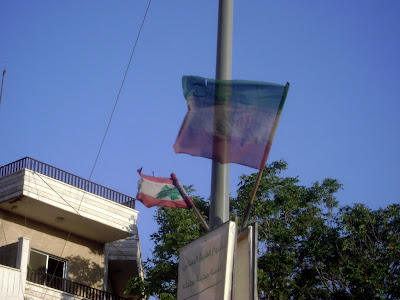
Iranian flag outside the museum
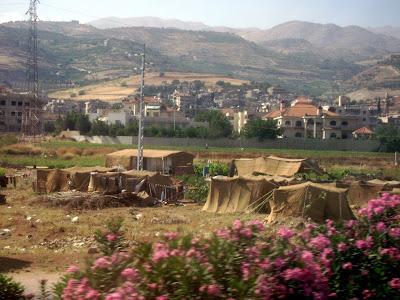
Palestinian Refugee Camp Tents
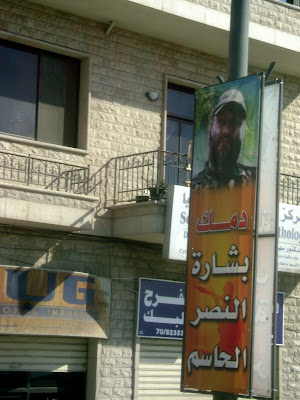
Imad again...Hezbollah signs, billboards, and flags cover the highway... just letting everyone know they're in Hezbollah territory
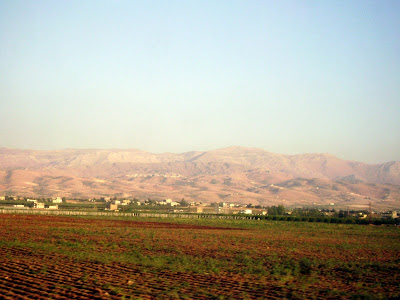
the Bekaa Valley, Hezbollah's homeland


