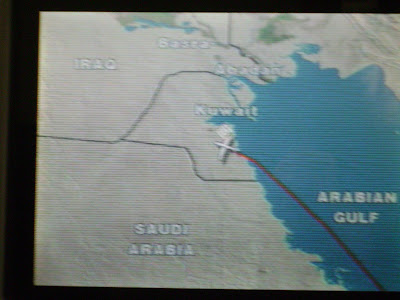
24 miles south of Iraq
southern outskirts of Kuwait City International Airport...in 1991 US Marines fought an Iraqi Army unit here and captured the airport
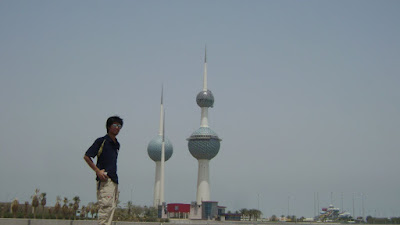
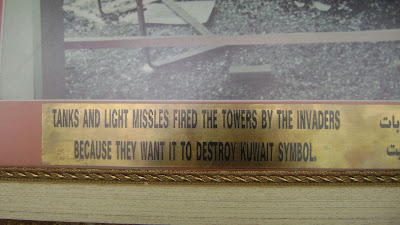
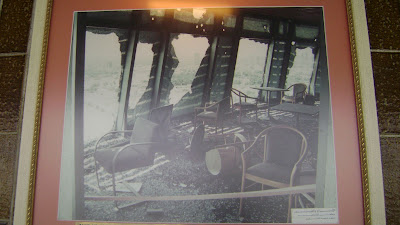
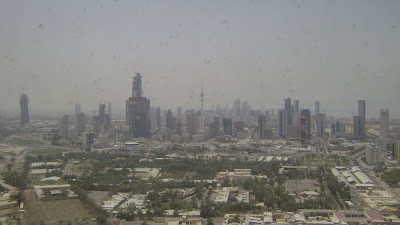
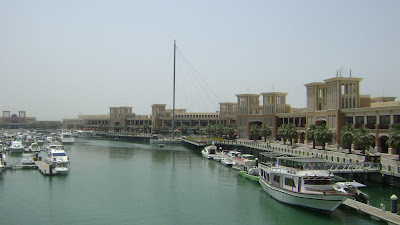
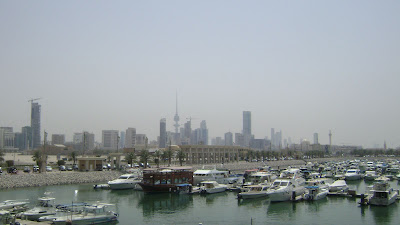
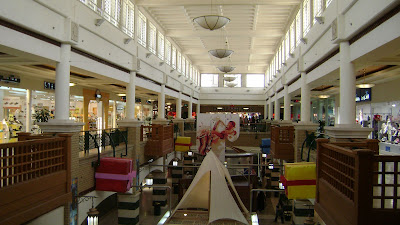
Kuwait is one of the hottest places on earth. It can be 90 degrees at night. In the daytime, the temperature is over 100 and got up to 113 while I was there. There isn't really much of sightseeing to do in Kuwait. I went to the Kuwait Towers and had lunch in the observation deck. Iraqi tanks used them for target practice during the Iraqi occupation of Kuwait in 1990 and 1991. The malls were just as glitzy as Dubai's and although the older generation of Kuwaitis are almost as conservative as Saudis, most of the young teenagers dress in jeans and t-shirts. I'd see families where the parents were dressed in their usual traditional dress but their kids would be wearing Western clothes. A lot of them had American rap songs for their ringtones. There still isn't a clubbing scene because alcohol is illegal (Western expats get around this by brewing their own beer) so many of the younger Kuwaitis just hang around in the malls. Sometimes they go to the malls and don't buy anything. Malls are just the place to be. They all even have the same stores as American malls.
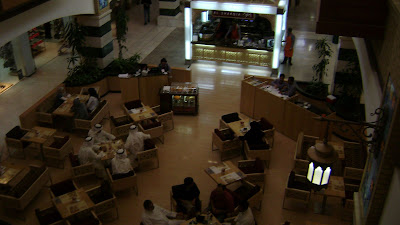
Kuwaitis
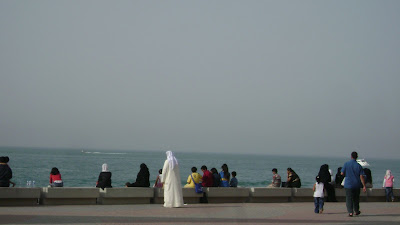
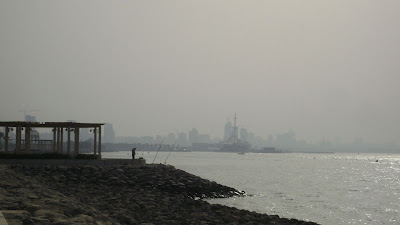
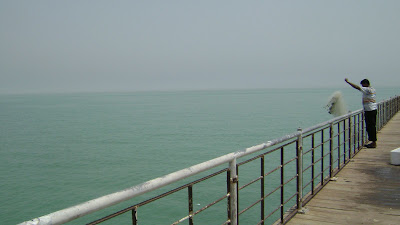
Fishing in the Persian Gulf
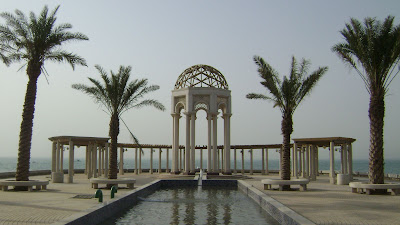
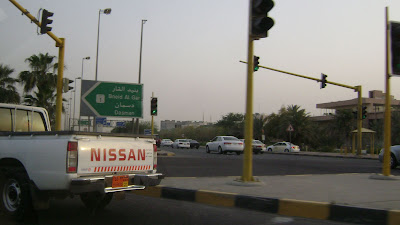
Riyadh Express...this highway goes all the way to Riyadh in Saudi Arabia
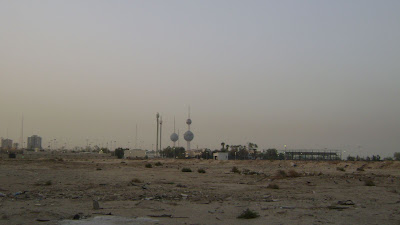
Site of the old US embassy, the Iraqis destroyed it in 1990
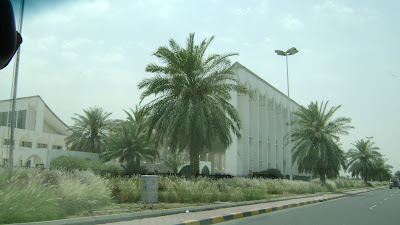
Kuwaiti Parliament
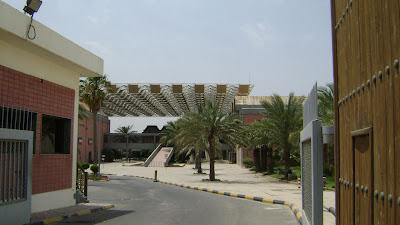
National Museum, probably one of the saddest places to visit in Kuwait. The Iraqis looted and burned most of the museum.
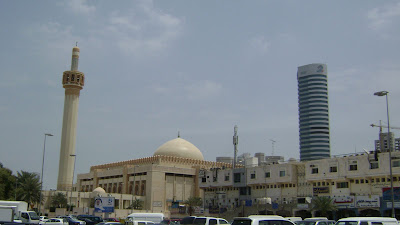
Grand Mosque, largest in Kuwait
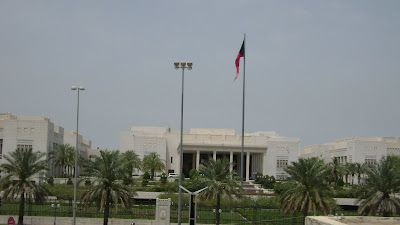
Sief Palace, one of the Kuwaiti princes refused to flee and defended it to the death against the Iraqis.
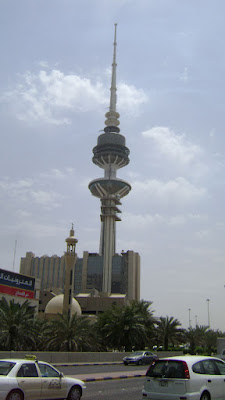
Liberation Tower, at 372m it is the tallest structure in Kuwait
After I had finished seeing the city, I decided to go out into the Kuwaiti desert. Landmines and unexploded Coalition ordinance are still a danger to those venturing out into the desert. I traveled 32km west of Kuwait City to the small town of Al-Jahra. In the 1920s, British and Kuwaiti troops defeated Saudi soldiers who claimed that Kuwait was part of Saudi Arabia. But more recently, Al-Jahra is also the site of the Highway of Death. During Operation Desert Storm word had reached the Iraqi soldiers in Kuwait City that the US Marines were assaulting the city. The Iraqis didn't even think about staying to defend the city. The Iraqi soldiers didn't even have time to mobilize. They just piled into every vehicle they could find: cars, pickups, buses, trucks, etc. After setting fire and looting hundreds of Kuwaiti buildings, they retreated back towards Iraq. Thousands of Iraqi soldiers streamed out of the capital in a convoy of almost 2000 vehicles that took up both sides of the road and stretched for 60 miles. The convoy made a rush to the Iraqi border but only got as far as Al-Jahra. Coalition aircraft destroyed the convoy in a "turkey shoot"... vehicles at the front and rear were destroyed first then everything else in between was targeted and bombed. The Iraqis were trapped. Not one vehicle was spared. Not one Iraqi soldier actually made it to Iraq. Not one Iraqi survived. Some estimates place the number of Iraqis killed at over 10,000. None of the Coalition aircraft were even damaged. It was one of the most lopsided battles in human history. For 60 miles of highway, there was nothing but death and destruction.
But today there are no visible signs of the destroyed Iraqi Army since nearly everything has been cleaned up. There's a huge market in the Middle East for scrap metal.
http://www.youtube.com/watch?v=NpdaQRGSv0k
http://archives.cbc.ca/clip.asp?page=1&IDClip=3127&IDCat=385&IDCatPa=264&IDDossier=
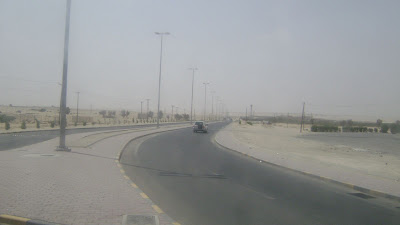
Highway of Death in 2008, if you follow it for about 30 miles you will get to Basra in Iraq
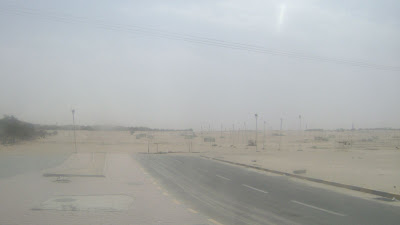
Highway of Death in 2008
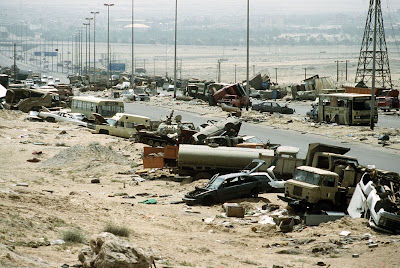
Highway of Death in 1991
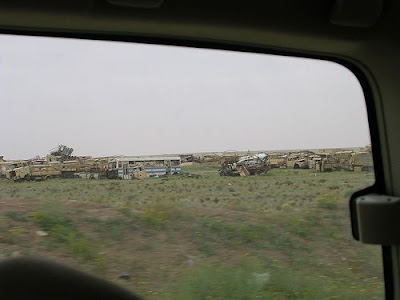
Vehicle graveyard near the Highway of Death today
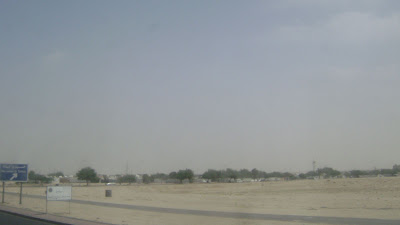
The Kuwaiti desert, nothing but sand, oil fields, and the occasional landmine
The town of Jahra itself was the most Arabic I have ever seen so far. Everything was in Arabic. There was not one word of English in the entire town. No one I talked to knew any English. Although that was a bit of a problem since I couldn't find a taxi to take me back to Kuwait City. I ended up paying some Kuwaiti guy with a pickup truck to take me back. I figured he could use $12 since he didn't seem to be doing anything else. $12 was probably his entire month's or year's salary. He was an interesting fellow. He didn't speak any English at all so we spoke in Arabic the whole time. We stopped by his house on the way out of Jahra and he introduced me to his wife and grandchildren. His house was a simple whitewashed building with a single room that had carpet and some mattresses on the ground. There was an outhouse around the back. I jumped into the back of his pickup and talked a bit more through the rear window. I told him I was from Dubai and he had never even heard of it. I asked if he had any sons and he said a lot of stuff that I didn't understand. I did pick up the word 'martyr' and since he was looking after his grandchildren, I assumed that his son was probably killed by the Iraqis. He also held my hand a lot. In the West, that would probably be perceived as homosexuality. Homosexuality is illegal in Arab countries under Islamic law. But even though gays are illegal, it is completely common to see two guys holding hands. In Arabic culture, it's apparently a sign of manly brotherhood. It was kind of weird holding his hand at times, but I just had to accept it as just part of the culture. He even smiled a lot and kept calling me his friend...probably since the $12 I gave him was the most money he had ever seen in his life.
The last thing I saw in Kuwait was a house in Qurain. Raids on Kuwaiti homes was common during the long 7 month Iraqi occupation. This house in Qurain was preserved after it had been the sight of a battle between Kuwaiti patriots and Iraqi soldiers. In February 1991, a few days before the US Marines and Arab soldiers from the Coalition liberated the city, a minibus (the one that is still parked outside today) with Iraqi soldiers drew up outside the house. The Iraqis had suspicions that the house was used by the Kuwaiti Resistance. The Kuwaitis inside the house opened fire on the Iraqis and holed themselves inside. After hours of laying siege to the house and exchanging small arms fire, the Iraqis called in a T-72 tank to bombard the house. The Iraqi tank repeatedly shelled the house and the Iraqi soldiers then stormed the building. 9 Kuwaiti patriots were killed, while 4 had hidden in a roof space and survived to tell the story. General "Stormin" Norman Schwarzkopf later visited the house and said that he had wished the Coalition had liberated Kuwait 4 days earlier so that this tragedy in Qurain would not have happened.
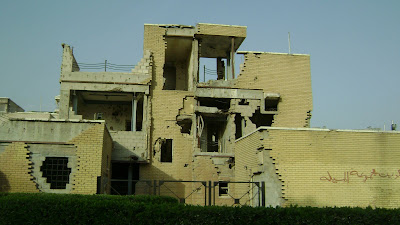
House in Qurain, an Iraqi T-72 tank fired at Kuwaiti patriots inside
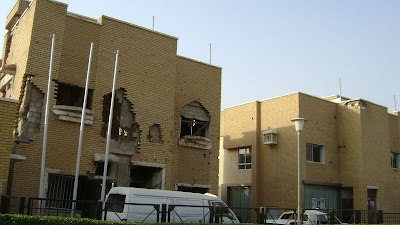
The minibus dropped off Iraqi soldiers at the house and hasn't moved since
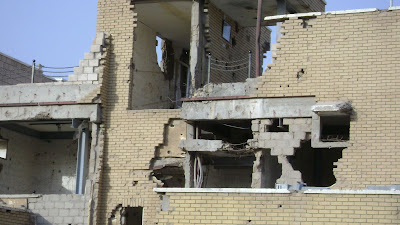
bullet holes from AK47's
Many would expect Kuwait to be a country left in ruins after the 1990 Iraqi invasion (which brought along a brutal 7 month occupation and then a subsequent scorched earth policy by the retreating Iraqi Army), but any new visitor to the country would never be able to guess that Kuwait was once a war zone. The physical damage done to Kuwait by the Iraqis was on a colossal scale, which culminated in the Iraqis setting fire to 700 of Kuwait's oil wells, one of the greatest environmental and economic disasters in history. But in an optimistic sign of human triumph, the oil fires were put out in only 9 months. Conservative estimates thought it would take at least 5 years. Despite the vast amounts of destruction wrought by Saddam's army (hundreds of buildings were either destroyed, burnt, and/or looted...Iraqi tanks even used the Kuwait Towers as target practice), Kuwait not only rebuilt its destroyed infrastructure in a few years after the war but is currently enjoying a period of rapid economic growth, just like all the other Gulf countries. Rebuilding a nation's infrastructure is a bit easier if that nation has 10% of the world's oil reserves. Kuwait is actually the 4th richest country in the world per capita, ahead of both the United States and the United Kingdom. Kuwait is one of the most expensive places to visit and can be more expensive than Dubai. Although the physical damage is no longer visible, the psychological damage done by the brutal Iraqi occupation still lingers on within many Kuwaitis. Landmines and unexploded ordinance (from both Iraq and the Coalition) still pose a threat in the desert. A generation of young men are still missing after the Iraqi invasion. But Kuwaitis are ambitious and determined people (and the 2nd most Islamic conservative nation after Saudi Arabia). Although the Iraqi SCUD missile attacks on Kuwait in 2003 temporarily returned the city to fear, Kuwaitis have since moved on and put the destruction behind them, as is evidenced by the many new fancy malls and rich hotels.
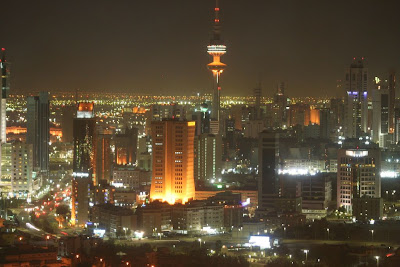
Kuwait


No comments:
Post a Comment