I was only supposed to be in Jordan for an hour, or the time it takes to take a bus from the airport outside Amman (the capital) to the border with the Palestinian West Bank (NOT Israel). The West Bank is not part of Israel; it is controlled and occupied by Israel. From the border I would take a bus to Jerusalem then another bus to Bethlehem. I was to leave Beirut at sunrise and be in Bethlehem by sunset. It ended up taking me over 36 hours to go 93 miles thanks to the geopolitical implications of the Middle East. After my 6 weeks of study in Lebanon, I had volunteered as an aid worker at a Palestinian refugee camp outside Bethlehem in the Israeli-occupied Palestinian West Bank. My aid work would last two weeks and then I would fly straight back to Notre Dame. Since Israel and Lebanon are at war there was no direct way to get to Beirut to Bethlehem. My only option was to fly to Amman and crossover into the West Bank by land. Beirut to Amman to Jerusalem to Bethlehem.
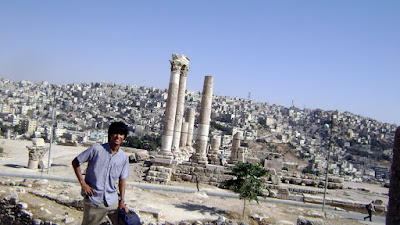
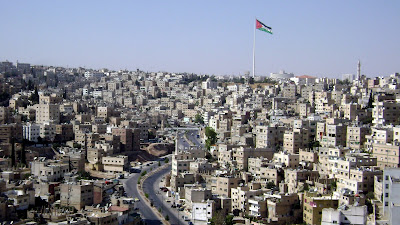
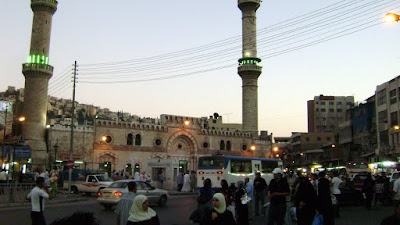
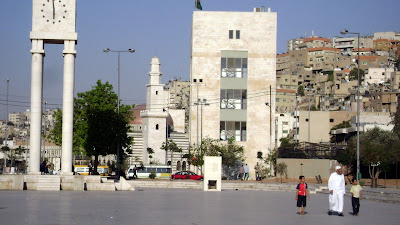
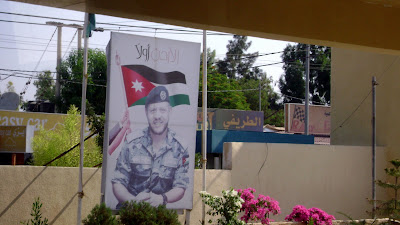
I left my apartment in Beirut at 5am and had a bittersweet goodbye to Lebanon as the sun was rising over the mountains to the west. I landed in Amman on time 45 minutes after takeoff. Turns out there are no buses to the border but only to Amman. This wouldn't be too much of a delay since Amman is on the way to the border anyway. I got to Amman and negotiated a fare with a taxi driver to take me straight to the border. I looked in my travel book after we left and it turns out I overpaid him by 10 dinars but whatever; I just wanted to get to Bethlehem. We get to the border 45 minutes later and to my luck it was closed. I never found out why, but borders around Israel and Palestine are prone to random closures at the hint of the smallest security threat. Great. The Israelis were being uptight Jews as usual. The border wouldn't reopen til the next morning. I tried to argue with the taxi driver (Arabic of course) to give me a discount since he was driving back to Amman anyway, border open or closed. He only relented when I told him I was a poor minority college student. So we got back to Amman and I had to find a hotel. I found a great place downtown thanks to my travel book. So I inadvertently ended up with time to explore Amman, capital of the Hashemite Kingdom of Jordan.
After visiting the great Arab capitals of antiquity, Damascus in Syria and Cairo in Egypt, Amman in Jordan doesn't really impress. It has its fair share of old Roman/Byzantium sights and ruins but they really don't compare. Amman itself is fairly Westernized and modern... but unlike Beirut there's no character to the place. Amman to me, at least after all my travels in the Mideast, seemed generic and bland. Nice but nothing special. Central and South Jordan, on the other hand, is where it's at and is actually probably the 2nd most visited tourist spot in the Middle East. I was confined to the capital since I needed to get to Palestine so I'd have to save trips to those regions for another time. News reporters put it best when they nicknamed the country, "The Hashemite Kingdom of Boredom." But on a more positive note, besides the aforementioned connotation of that nickame, Jordan is widely known as the most stable country in the entire Middle East. The royal family (who claims descendency from the Prophet Muhammad) enjoys widespread support, both from Jordanians and from the West, for its wise handling of various crises throughout Jordanian history that threatened the peace and stability of the nation (1948 War, 1967 War, Black September 1970-1, 1973 War, Gulf War 1990-1, Peace with Israel 1994, Al-Qaeda bombings 2005, etc.)
Anyway I left Amman early the next morning and got to the border. I wasn't surprised to see it full of Arab families trying to get into Palestine. The border is controlled by the Israelis even though the West Bank wasn't annexed by Israel in 1967. Palestinians have no control over their borders; just one of the results of living under occupation. It took me 7 hours to cross the border. The Israelis didn't like my visa stamps from Iran/Syria/Lebanon or my Hezbollah stuff in my bag. They took me into a separate room and questioned me twice. The UN imposed a demilitarized zone between the two nations because although the Jordanians signed a peace agreement with Israel in 1994 (probably under large US pressure, who is a strong ally with Jordan), it doesn't exactly mean they no longer harbor bitterness towards Israel's existence or its human rights violations of Palestinians. Peace in this context simply just means the absence of war, or as Ambrose Bierce put it, "in international affairs, [peace is] a period of cheating between two periods of fighting."
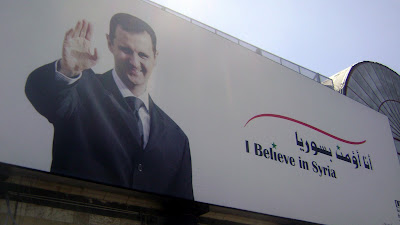
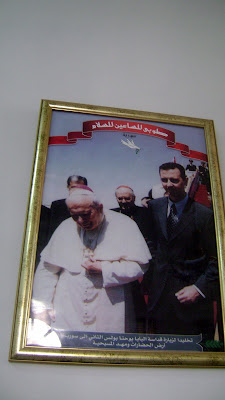
In my previous post, I listed visiting Syria for 3 days as one of the definite highlights of my summer in the Middle East region. As a result of Syria's infamous reputation in the West and the negative perceptions that many Westerners have of it, the Syrian Arab Republic is one of the least visited countries in the world by Americans and Westerners. The US State Department lists Syria as a "State Sponsor of Terrorism" and has posted a Travel Warning that urges Americans to be aware of the apparent dangers of having a presence in Syria. Senior US officials have also included Syria in the "Axis of Evil"... another wasteland of a country in the Middle East full of angry, hostile Islamists; sounds a lot like my solo trip to Iran in April and we all know how that turned out. After visiting countries like Iran and Syria, suddenly the Middle East doesn't seem so bad after all.
An entire lifetime of exposure to biased Western media is bound to throw anyone off balance and leave them with a distorted view of the Middle East, especially states (Iran/Syria) and non-state actors (Hezbollah/Hamas) that are in opposition to US/Israeli policy in the region. It's a shame that so many people miss out on being able to visit Syria for these reasons. Instead, most foreign travelers head for the obvious tourist traps in Egypt and Jordan. In an objective international context, Syria lists among the best tourist destinations in the world. It's hard to realize why anyone would ever want to visit Syria if you believe everything the media and US government tells you about Syria. On the contrary, my Lebanese professors would tell me that Syria boasts some of the most beautiful and cultural sights and attractions in the Middle East and that Syria is actually one of the safest countries in the Middle East for Americans to visit. If anything, Americans are a bigger target in Saudia Arabia, a close US ally. Anyone who tries to picture Syria in their heads would probably think of a third-world backwater country full of terrorists and desert wastelands. You couldn't be anymore wrong.
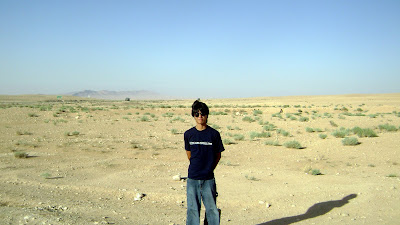
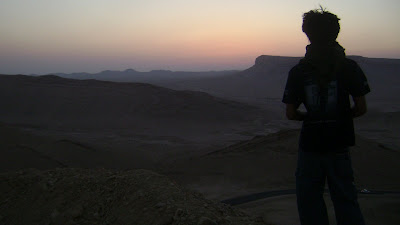
Americans usually can't get into Syria but getting into Syria actually wasn't a problem for me at all since the school organized the trip, including the visas. Also we were entering overland from Lebanon and since Lebanon and Syria do not have diplomatic ties or a demarcated border, Syrian officials generally will let anyone with a Lebanese visa to enter Syria through Lebanon. Of course, that means anyone without an Israeli stamp in their passport. Damascus, the capital of Syria, is only about 50 miles from Beirut. We left Beirut at 12pm but we didn't get to Damascus until around 7pm, which is even worse than when we were in Ecuador last December/January and it took us 7 hours to go 100 miles from Quito to Cojimies. Anyway, we found a duty free shop at the border and loaded up the tour bus with booze. We even bought a Heineken keg for the long ride into the Syrian desert. Most of the terrain between Beirut and Damascus is arid (similar to southern Italy) and characterized by rolling hills and mountain ranges... the vast desert starts a few miles west of Damascus and stretches all the way to Baghdad.
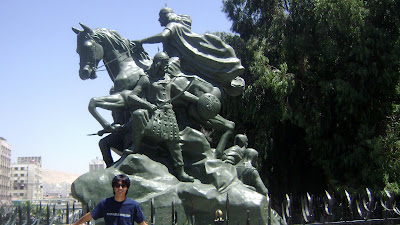
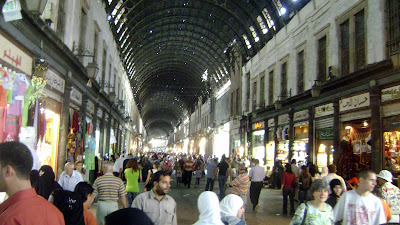
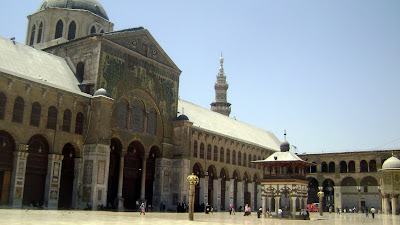
Damascus is actually the oldest continuously inhabited city in the world. Roads have always led to Damascus and the city is a testament to the dozens of empires that have come and go over the last few thousand years (Roman, Persian, Greek, Assyrian, Byzantium, Egyptian, Mamluk, Umayyad, Crusader, Ottoman, French). After a few weeks in Beirut, it was a bit refreshing to be in Damascus. Though older and more populated than Beirut, Damascus seemed a lot more cleaner, less densely populated, and better planned... though, the driving conditions were just as bad. The old city, enclosed from the modern city by stone walls, is remarkably well-preserved and just walking through the narrow roads and alleys around the souqs is an adventure in it of itself. After purchasing a hookah for $40 that would've cost over $100 in the US and exploring the Muslim (Ummayad Mosque) and Christian Quarters (St. Paul's house) of the old city, we boarded the bus for Palmyra (Tadmur), a 4 hour drive into the middle of the Syrian desert. The bus used the old Damascus-Baghdad highway, a route used for caravan trade in ancient times but in recent times is the main route used by insurgents entering Iraq through Syria. Palmyra is about halfway on the highway and 70km from the Iraqi border.
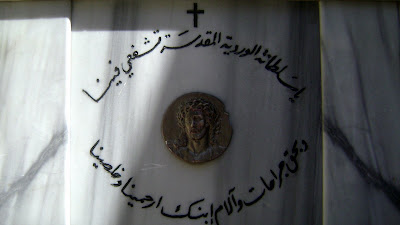
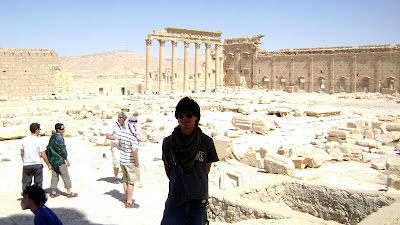
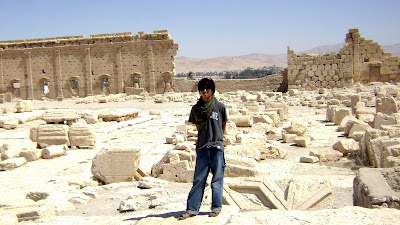
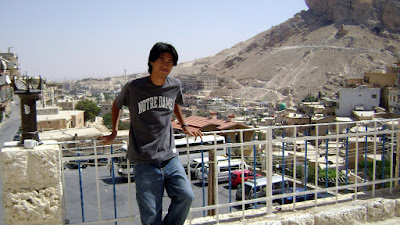
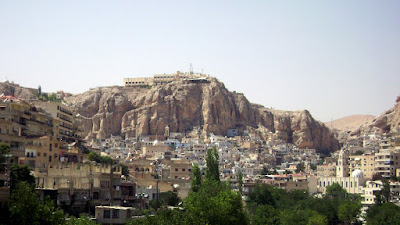
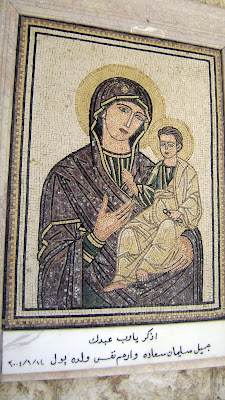
Palmyra remains one of the most impressive ruins in the Middle East, after the Pyramids in Giza and Petra in Jordan. An ancient desert city, it was conquered by the Romans in the 1st century AD. Here we were, in the central Syrian desert, and the Roman Empire influence was still present. After Palmyra, our bus ventured back across the barren desert into the Western Syrian mountains on the border with Lebanon to a town called Ma'loula. The town of Ma'loula is the only place in the world that still speaks Aramaic, the language of Christ. Ma'loula is a predominantly Christian town in the Syrian mountains. 10% of Syria's population is Christian. It was outside Damascus that Saul of Tarsus converted to Christianity and changed his name to St. Paul. It was also during the Lebanese Civil War that the Syrian Army prevented the Christian militias from being defeated by Muslim militias.
While I was doing my 6 weeks of summer school in Beirut, I had the intention of making regular updates on this blog, from my impressions of Lebanon and its unique culture to random stories about running into Hezbollah (several times). That quickly changed when I started settling into daily life in Beirut. Class from 8 until 1230. Gym, lunch, and studying/homework until dinner. Going out at night and coming back sometime between midnight and dawn. I was spending the summer in Beirut, famous for being the undisputed party capital of the Middle East. The last thing I wanted to be doing was spending all my time in front of a computer with Beirut and Lebanon just outside my window. So, I decided to attempt to describe my 6 weeks of study abroad in Beirut, Lebanon with just one essay. Initially, I thought such a task would be no problem and ideally I would've finished and posted it by the time I left Beirut. It's the 11th of August and it's only now that I think I've come up with an essay worthy of describing the greatness of Beirut and Lebanon. And I suppose it took so long for me to work on this is because I also hoped of inspiring more to visit. Of all the countries in the Middle East I've had the privilege of visiting or living in, Lebanon is by far my absolute personal favorite, and its capital Beirut is without a doubt my favorite city in the entire region.
It's a shame that Lebanon is one of the least visited countries in the Middle East. Surrounded by its larger and more infamous neighbors, Israel and Syria, most people can't even find Lebanon on a map. Usually the only times people will ever hear of Lebanon, it will be the nightly news reporting on sectarian violence, terrorism, or war in the country. But the Lebanese always speak of their country as the most beautiful in the Middle East, from its hospitable mountain vilages to its glitzy capital Beirut, from skiing in the snowy mountains in the morning to swimming in the sandy beaches in the afternoon to clubbing in the capital at night; Lebanon is the most underrated country in the entire Middle East.
About the size of the US state of Connecticut, Lebanon has more to see and do than countries double or triple its size. 6 weeks still wasn't enough for me. The notion that Lebanon is 'too dangerous' is a grossly exaggerated misconception and misrepresentation of an otherwise friendly and welcoming nation, as described by the Lebanese themselves. The US State Department has a 'Travel Warning' issued for Lebanon and urges Americans to avoid any travel or presence in the country. In the last 6 months, I've been to 7 countries with so called 'Travel Warnings', and I've come up with the conclusion that they don't mean anything. Sure, Travel Warnings for Iraq and Somalia are definitely legitimate but I have never at all felt unsafe in Lebanon, Israel, Palestine, Syria, Iran, the Philippines or Saudi Arabia... I didn't even feel unsafe when I went to Hezbollah-controlled South Beirut and Hezbollah pulled my taxi over. The only way to have a legitimate opinion about a country is to just see it yourself, with a blank slate in your mind. Take whatever else you hear about it, whether its from the media or the government, with a grain of salt and just go.
Summer is probably the best time to be in Beirut. There are more than 12 million Lebanese abroad, while there are only about 4.4 million in Lebanon itself. But hordes of overseas Lebanese return to their home country to spend the summer. My apartment balcony had a view of the Mediterranean Sea. The beach was only a 10 minute walk away. At night, the rooftop bars and clubs come alive and stay open until you can see the sunrise. The Lebanese are famous for knowing how to party, in any situation. The country's seen some rough times since 2005, when former PM Hariri was assassinated by a car bomb in Beirut. Since then, Lebanon's seen nothing but more political assassinations, sectarian violence, bombings, civil unrest, war, etc. There's never any lasting peace in Lebanon and even when it seems like it, tensions are always high and the possibility of an outbreak of more fighting always exists. LAU is located in West Beirut, which was overrun and captured by Hezbollah fighters in May after intense gunfights in the street, which nearly pushed the entire country into another civil war. The guy who works at the Starbucks on the ground floor of my aparment would tell me how Hezbollah fighters would come by and take coffee breaks during the fighting. Yeah, they'd just rest their RPGs and AKs against the table and sit there sipping on coffee. Despite the Doha Agreement, which ended the May conflict, sectarian violence still occurs throughout the country (Tripoli). As a result, there's a strong military presence everywhere in the capital. Soldiers and tanks are positioned on every road and every intersection. It's impossible to go for a walk and to not see an armed soldier or checkpoint. But there's a pervasive sense of 'life goes on' that seems to be imbued in every Lebanese citizen and hard times never seem to dampen their strong spirit. Beirut is home to two American universities, AUB and LAU, which adds a strong sense of youth and vigor to the capital and best seen at night in any of the various nightlife neighborhoods around the city. Walking around the city is always an adventure. 5-star hotels are right next to bombed out or bullet-ridden buildings. It's actually rare to find an old building with no bullet holes in it. You'll see a soldier on top of a tank on one corner and then find an expensive designer brand fashion store on the next corner. Beirut, called the Paris of the Middle East, is unique and unlike any other city in the world.
Lebanon is the only Middle Eastern country without a desert. Instead, around the country you'll find Byblos (the 2nd oldest city in the world) and Tripoli in the north. On Mt Lebanon, you'll find snow (even in the summer) and cedar forests that once covered most of the country. The simple villages in these mountains make a stark contrast to the glitzy, cosmopolitan capital. The large Roman ruins at Baalbek are so well-preserved that you can actually imagine what they were like in ancient times. Also in the Bekaa Valley is the home of Lebanon's world-class wine industry and vineyards, in addition to being the heartland of Hezbollah, the Shi'a paramilitary and political organization in Lebanon. Depending on your politics, they're either terrorists or freedom fighters. Down south are the Druze villages in the Chouf mountains and the ancient port cities of Tyre and Sidon, now unfortunately home to some of the 400,000 Palestinians living in refugee camps in the south.
The Lebanese people are unique in that they are all the same and different in so many ways. Though on the surface people identify themselves as Lebanese, beneath that sense of nationalistic pride are many various sects of 17 different religions living side by side with each other. Mainly split between Sunnis, Shi'ites, Christians, and Druze, this melting pot of cultures can either help to promote a sense of tolerance and diversity unlike any other Middle Eastern nation, or it can sow the seeds of conflict and war, as it has throughout Lebanon's long-troubled history, including its brutal 15 year civil war (1975-1990), Syrian occupation (1976-2005), and Israeli occupation (1982-present). Probably the only thing that the Lebanese can agree is on is their bitterness/hatred of Israel. On the upside, people on the streets tend to have more of an international outlook and be more cultured than the citizens of any other Mideast country. Everyday church bells will ring and muezzins will sing the call to prayer, side by side with each other. And a conversation with someone on the street could include Arabic, English, and French, sometimes all in the same sentence.
It's hard to perfectly describe spending 6 weeks in a country like Lebanon and a city like Beirut. Here's a short list of experiences off the top of my head:
-4th of July at Hard Rock Cafe -all you want wings and beer at Hard Rock Cafe on Mondays -sunsets on the Mediterranean Sea -going to every region in Lebanon controlled by Hezbollah (South Lebanon, Bekaa Valley, South Beirut) and getting out alive -going to Hezbollah-controlled South Beirut and having armed Hezbollah guys pull our taxi over -people-watching on the Corniche -meeting Wadi Jumblatt and getting a tour of his compound (leader of the Druze) -the crazy times/late nights at pubs, bars, clubs, etc. -staying out all night and hearing the morning call to prayer and church bells -random gunfire -drinking/going out on weeknights -Buns and Guns
-meeting up with Ghada Bualuan, my 1st semester Arabic professor at ND -the prisoner exchange between Hezbollah and Israel -playing paintball at a Hezbollah field in South Beirut -Filipino night club -the Opus Dei Center in Beirut, named Les Cedres -Euro Cup 2008, Viva Espana! -the only rule to driving in Lebanon: there are no rules -apartment parties -traditional Lebanese dinners, including around 20 appetizers -celebratory gunfire -hearing explosions in the city and not knowing whether it was more fighting or some guy just getting married -the Palestinian refugee camps -riding around Beirut on a moped -getting a free ride around Beirut in the open back of a Lebanese Army Humvee -excursions to Tripoli (during the sectarian fighting), Byblos, Mt Lebanon, the Cedars, Tyre, Sidon, Baalbek, the Chouf mountains, and Syria -all the other short stories and anecdotes that I can't remember
I'll return to Beirut and Lebanon one day, inshallah. Viva Lebanon!
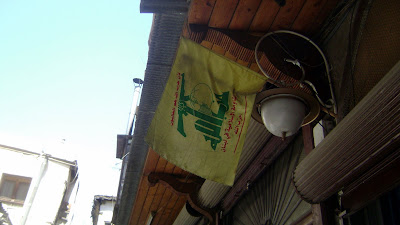
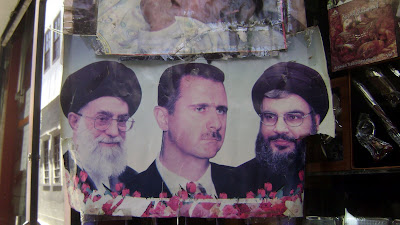
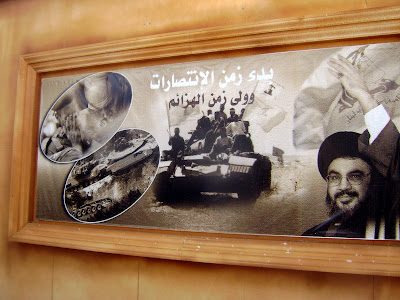
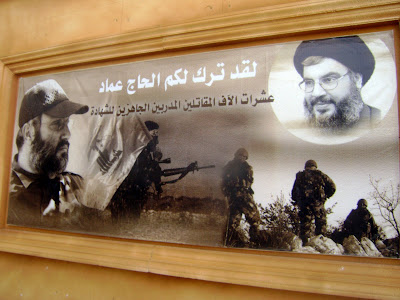
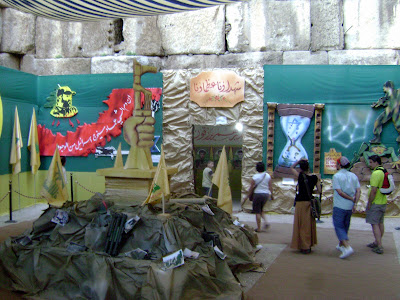
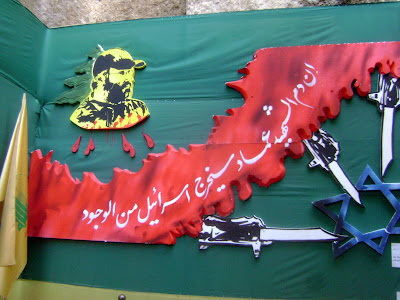
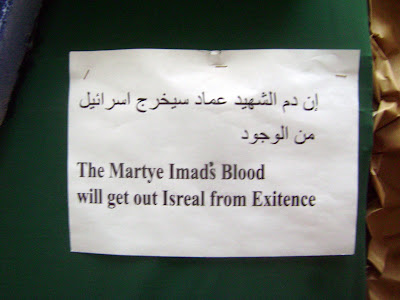
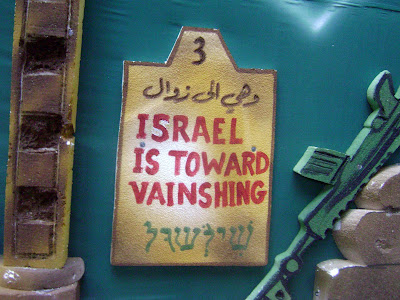
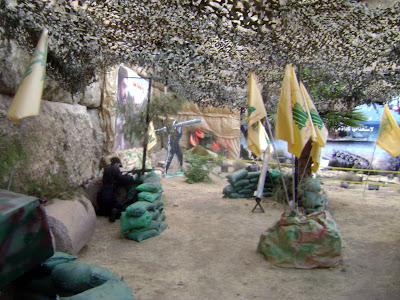
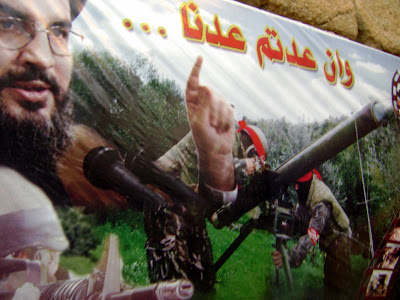
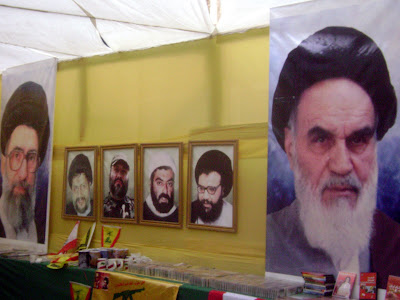
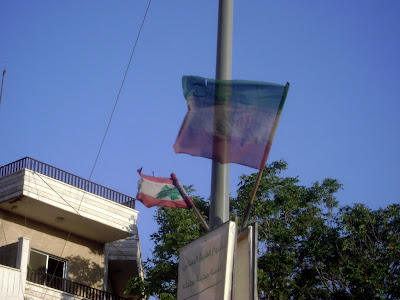
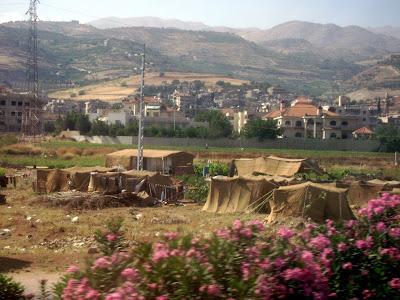
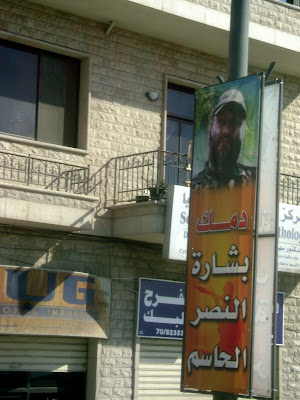
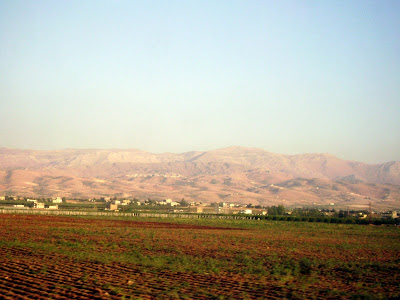
On the 2 year anniversary of the start of the July/August 2006 War with Israel (July 12), in which the Israelis invaded Lebanon and bombed Beirut, we visited the Bekaa Valley, the heartland of Hezbollah, the Shi'a political/paramilitary organization in Lebanon that is backed by Iran and Syria. They had a museum that commemorated their "divine victory" over Israel, the "Zionist entity"... Hezbollah is listed as a terrorist organization by the US, Israel, and the UK, although many countries in the Muslim and Arab world highly regard Hezbollah as a legitimate resistance movement. One of things you notice on the highway into the Bekaa Valley is that the highway is covered in Hezbollah flags and billboards. A towering gate, with the portraits of Hezbollah's leaders and the Iranian Grand Ayatollahs, stands at the entrance of this Hezbollah-controlled territory. The fields on the side of the highway were littered with Palestinian refugee camps and tents, who are given shelter and protection under Hezbollah.
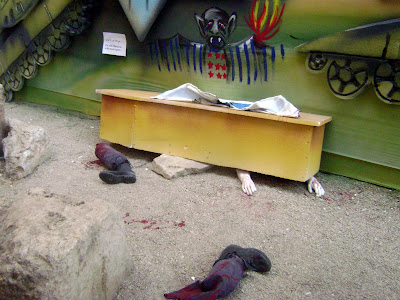
The museum was typical propaganda. But like most propaganda, half were lies but half was true. The 2006 War was an embarassment for Israel, a long time regional power, in which its modern, Western military was stalled by Hezbollah's guerilla fighters. Israel had two objectives in the war: 1. to reclaim its two captured soldiers taken by Hezbollah in a cross-border raid and 2. to destroy (or at least inflict massive damage to) Hezbollah. It failed both, and ironically Hezbollah is actually stronger than it was before the 2006 War started. Hezbollah is actually even more powerful than the Lebanese Army. Israel is getting its two soldiers back tomorrow (July 16), dead or alive no one knows, but at the cost of captured Lebanese and Hezbollah fighters. In the end, Hezbollah got everything it wanted. In May, Hezbollah overran streets and neighborhoods in West Beirut (where my apartment and university is located) and completely routed the pro-government forces. Over 80 people were killed across the country, which would have descended into another civil war if it hadn't been for the Qataris and the Doha Agreement, which turned out to be another Hezbollah victory since it gave them more power in the government, especially the power to veto any new legislation. So it looks like Hezbollah won't be disarming anytime soon.
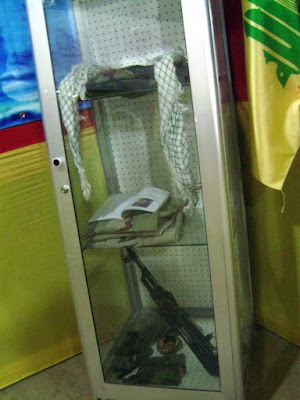
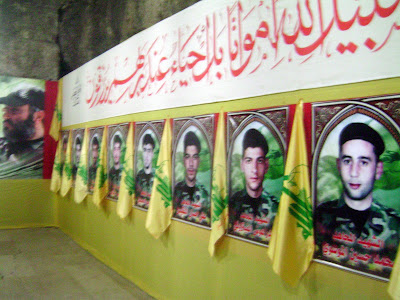
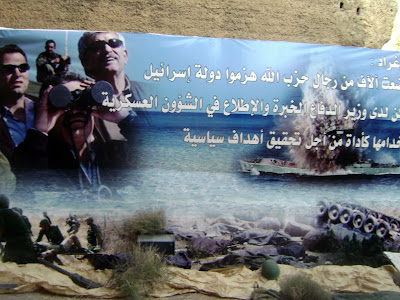
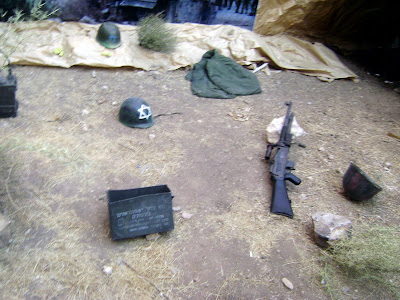
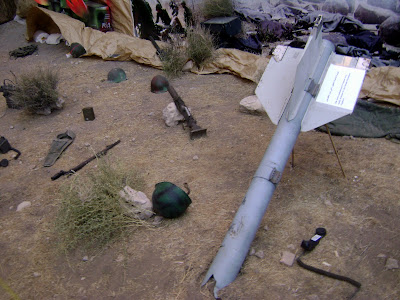
The museum, or "terrorist propaganda center", had mostly pictures of destroyed Israeli equipment and dead soldiers. Some of the captured Israeli equipment was on display (rifles, iPods, helmets, etc.) In the back was a hall filled with portraits of Hezbollah martyrs, fighters who died in the war against Israel. There was this young kid, probably 8 years old, who worked in the museum and explained the exhibits. He talked a lot but what struck me is that he actually didn't know anything. He'd been brainwashed into Hezbollah's thinking and when I tried to actually have somewhat of an intellectual discussion with him about Hezbollah, he couldn't say anything more than what he had already been taught. As I was leaving, it was hard getting through my mind that I had just been in a "terrorist" area. Then again, one man's terrorist is another man's freedom fighter. An American militiaman was a freedom fighter to his fellow colonists but a terrorist to the British Empire. Hezbollah isn't Al-Qaeda. Hezbollah is actually at war with Al-Qaeda for the same reasons that the US is: Al-Qaeda is un-Islamic and a dangerous threat to peace. Of course I don't support Hezbollah, but I just can't agree with why the US and so many Americans blindly support Israel and its regional policies, which in turn harm the US's own policy in the Middle East.
I can understand Hezbollah's resistance to Israel (which still occupies Lebanese and Syrian land...and not to mention, Palestinian land) but some people would raise the issue of Israeli civilian casualties. Though Hezbollah, to justify its legitimacy, has a strict targeting policy that forbids attacking innocent civilians (Hezbollah condemns Al-Qaeda's attacks on innocent civilians, especially 9/11), they consider Israeli civilians to be a separate issue. Nasrallah, Hezbollah's leader, stated that "in occupied Palestine, there is no difference between a soldier and a civilian, for they are all invaders, occupiers and usurpers of the land." Then again, Israel also violated the UN Resolution (which prohibited bombing in heavily populated civilian areas aka South Beirut). It's amazing how much news is filtered from the Middle East to the West and how Israeli violations against innocent civilians goes largely unreported. In my opinion, war is war. Civiians on both sides unfortunately get caught in the crossfire. If Israel wants to deserve US support, it should earn it and act appropriately. And if the US is to give support, it should only be with good intentions and not blindly.
What people should be upset about is how much reporting is altered to fit a news agency's agenda. It's a real shame considering Hezbollah's highly regarded and well-respected social services that it provides to the Lebanese people and Palestinian refugees in Lebanon (shelter, food, employment, schools, hospitals, mosques, social welfare, etc.). A US author once commented that Hezbollah's relief efforts to South Lebanon and South Beirut in the aftermath of the 2006 War was more organized and efficient than the US government's response to Hurricane Katrina. But no one in the West sees this side of Hezbollah and automatically assume they're just the Shi'a version of Al-Qaeda.
I could go on and on about Hezbollah but I'll just bring that up in more posts later on. Supposedly there's another Hezbollah museum in South Beirut, another area controlled by Hezbollah, so we'll try to see that one too. Anyway, the prisoner exchange between Israel and Lebanon/Hezbollah is tomorrow morning at 9am, and my university canceled classes for the day.
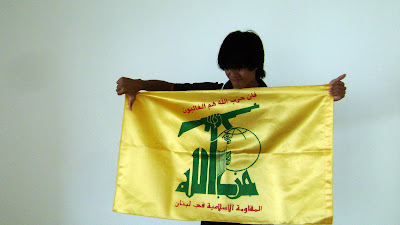
with the Hezbollah flag, i gave the thumbs down while the guards weren't looking so this wouldn't be incriminating
captured Israeli equipment and photos of destroyed Israeli vehicles
Imad
Martyrs Hall.. Hezbollah fighters killed in the war against Israel
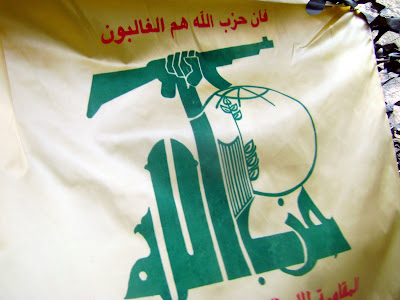
the top says "Then surely the party of God are they that shall be triumphant" (Quran 5:56) and the bottom (cut off) says "The Islamic Resistance in Lebanon"
Israeli warship that was hit by a Hezbollah missile off the coast of Beirut
the Israeli Black Hawk that was shot down by Hezbollah... its wreckage is on display at the Hezbollah museum in South Beirut
captured Israeli equipment
illustrating Hezbollah's tactic of firing massive amounts of missiles into Israel
at the museum gift shop: light-up keychains and coffee mugs with the portraits of Iranian Ayatollahs/Hezbollah leaders on them...only $2...yes, they accept US currency.
Iranian flag outside the museum
Palestinian Refugee Camp Tents
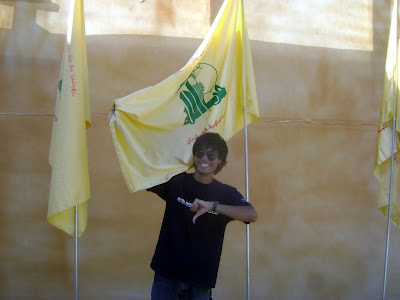
Imad again...Hezbollah signs, billboards, and flags cover the highway... just letting everyone know they're in Hezbollah territory